Best Danish Design Stores in Copenhagen
Copenhagen didn't earn its design reputation from furniture fairs alone — it's in the showrooms that double as museums, the workshops you can watch from the street, and the corners where a chair matters as much as the building around it. This is the route for anyone who reads a city through its objects, ranked by what actually earns the trip.
14 JUNE 2026
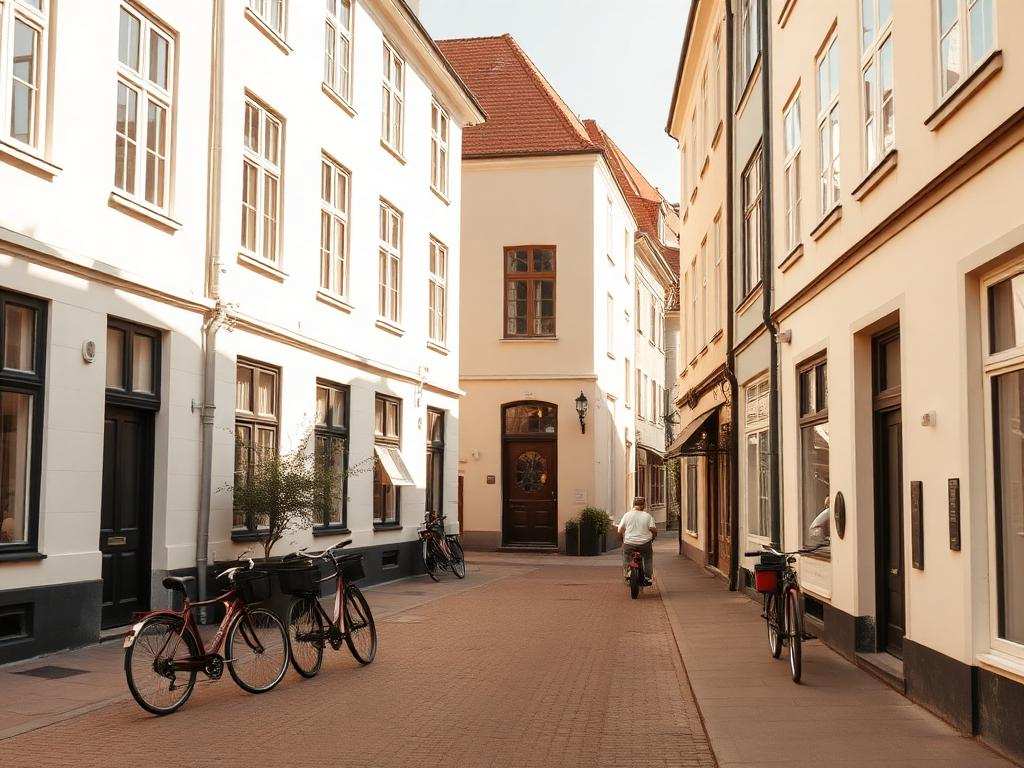
Illums Bolighus is the reason the rest of this list exists. Open since 1925, it's less a department store than a century-long argument for what Danish design should look like — Arne Jacobsen, Hans Wegner and Poul Henningsen sit alongside newer names, arranged with the kind of care that teaches you how to combine material, light and color before you've bought a single thing. Everyone hits the ground floor; the real find is upstairs, in the smaller side rooms where lesser-known Danish studios get shelf space next to the household names.
HAY House takes over the second and third floors of a period apartment on Østergade, full catalogue spread across rooms that still carry their original mouldings and window light. It's the most-visited stop on this list, and still worth it precisely because HAY restages the space every season rather than just restocking shelves.
Normann Copenhagen occupies a former cinema turned four-story showroom a short walk away, and it's the one stop here where sheer scale becomes part of the experience — furniture, lighting and homeware arranged less like inventory and more like a museum you're allowed to buy from.
Paustian sits inside a former bank designed by Jørn Utzon, and the building does a lot of the talking: columns, marble ceilings and old vault rooms house a curated mix of established Danish names and quieter, harder-to-find brands. Go here once HAY and Normann start to feel too familiar — it's less about volume, more about the eye behind the selection.
Designmuseum Danmark is where you go to understand why any of the above matters. Kaare Klint's furniture, a century of thinking about how a body sits — less a starting point than a decoder ring for everything you've just seen in the boutiques.
For the More Curious
Kapau, on Gothersgade, runs as a shared studio between several young Danish designers, with no flagship-store logic — each corner belongs to someone different, turning a visit into a kind of archipelago of pieces you're unlikely to find outside Denmark.
Henrik Vibskov's boutique on Gammel Mønt treats the shop itself like an installation rather than a point of sale — perfume, unisex clothing and homeware sit together without the usual Scandinavian restraint. Worth walking through even empty-handed; the staging changes often.
Glaspusteri occupies a former 18th-century sailors' bar near Nyhavn, where Christian Edwards blows glass in full view. The vases and lamps that come out of that workshop carry a deliberate irregularity no mass production replicates, and watching the process is as interesting as the object itself.
FRAMA Studio Store, housed in a former 18th-century pharmacy, builds its entire visual language around stone, wood, metal and natural light rather than any single product line — the stop for anyone whose interest runs more toward material than brand name.
Where Design Meets Everyday Life
Lille Petra, owned by the design house &Tradition, is technically a café, but it's staged like a living room, with Verner Panton and Jaime Hayón pieces you're meant to sit in rather than admire from a rope line. Coffee here, tucked into a quiet courtyard near Kongens Have, is the best way to test furniture before deciding whether you actually want it at home.
Studio Arhoj is where Danish ceramic tradition gets a wink — hand-thrown pieces and glitch-glazed ghosts sit next to more classic tableware. Smaller and more affordable than the flagships above, and a good source for gifts that don't feel like souvenirs.
Beyond the Shop
Dansk Arkitektur Center, inside the BLOX building on the harbor, treats Copenhagen's architecture as the exhibit — models, installations and a rooftop view that lets you match theory to skyline in the same visit.
The Audo turns the idea of a hotel into a living showroom: every room furnished by Audo Copenhagen, functioning as much as a design experience as a place to sleep. The natural place to end a day built around this list.
Louisiana Museum of Modern Art, half an hour north by train, is worth the trip on its own terms — a masterclass in how architecture, art and landscape can be designed as a single experience rather than three separate ones.
Places worth the detour...
Two more worth knowing about, if you have the time: Ferm Living, whose flagship sits inside a former 1770s military arsenal on Holmen, and Beau Marché, a vintage furniture shop with a French accent and a small wine café in the backyard.